Hotel Revenue Management Software: A Guide to Dynamic Pricing for Hotels
Dynamic pricing allows hotels to adjust room rates based on real-time demand and market conditions. Instead of fixed prices, hotels use data-driven rules to align rates with booking patterns, competition, and seasonality. When supported by the right hotel revenue management software, dynamic pricing helps improve both occupancy and average daily rate (ADR).
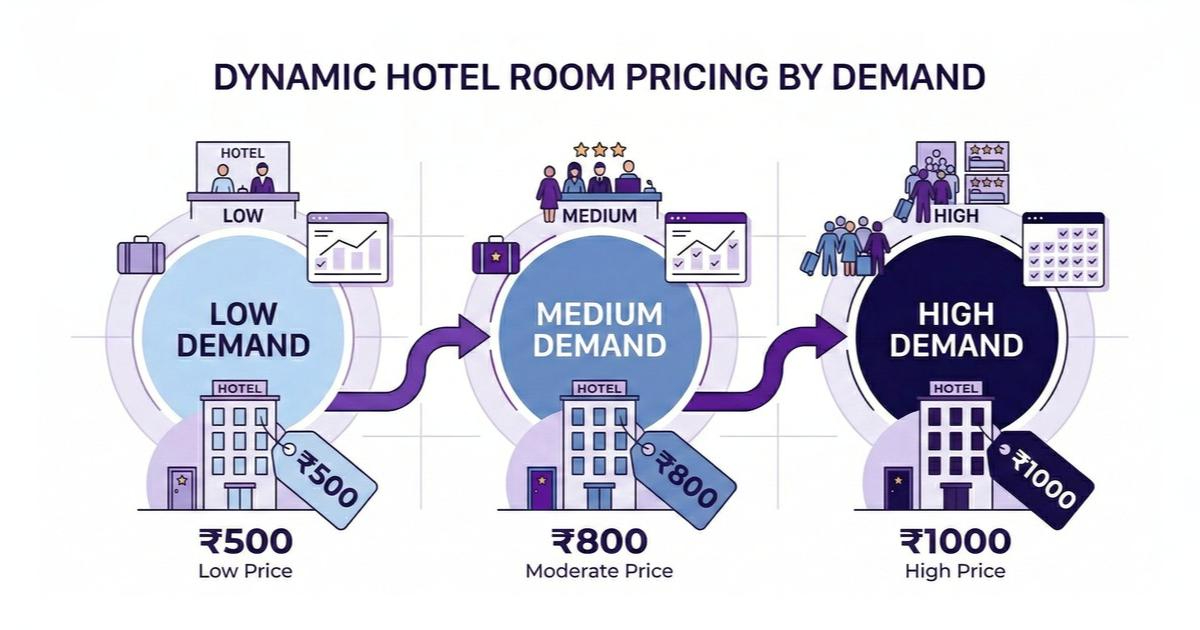
Room rates adjust based on demand, the core idea of dynamic pricing.
In today’s competitive hospitality market, static pricing no longer works. Guest demand shifts quickly, OTAs influence rate visibility, and local events can change booking behavior overnight. This is why dynamic pricing has become a core part of revenue management for the hotel industry.
Key Takeaways
- •Dynamic pricing aligns room rates with demand and market signals
- •Hotel revenue management software automates analysis and rate execution
- •Clear pricing rules protect profitability and guest trust
- •AI improves forecasts, but human oversight remains essential
- •Monitoring ADR, RevPAR, and occupancy ensures pricing stays effective
What Is Dynamic Pricing in Hotels?
Dynamic pricing is a tactical approach hotels use to align room rates with shifting market conditions. By combining demand signals, competitor rates, and historical booking data, hotels can update rates at regular intervals or near‑real‑time so pricing reflects current market dynamics and customer willingness to pay.
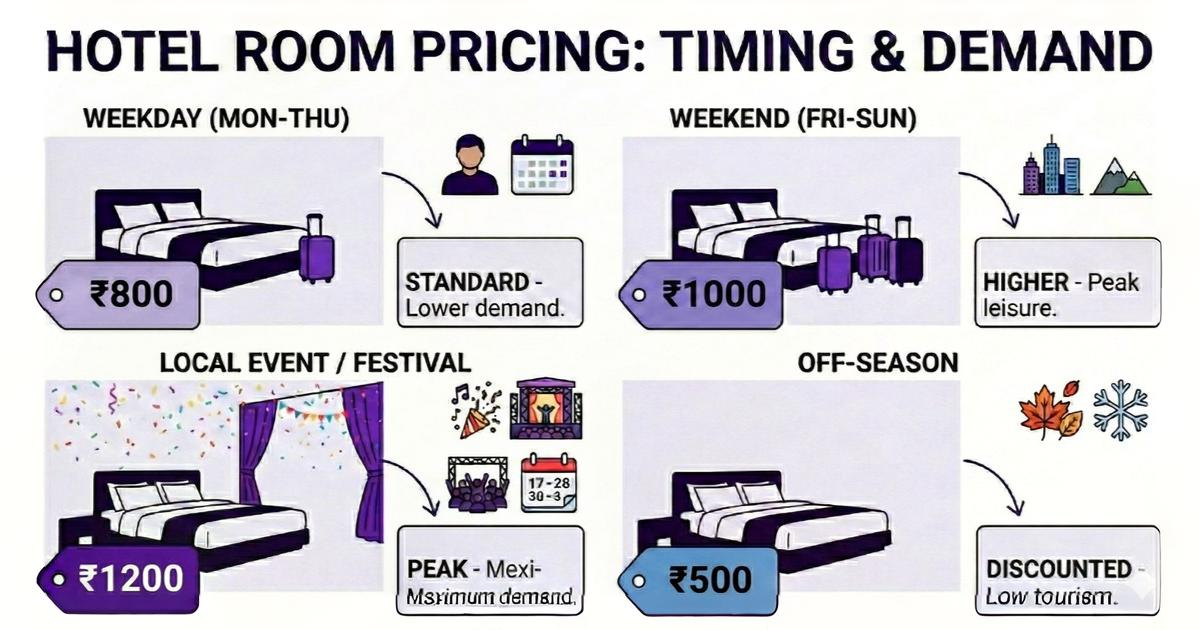
Room prices change based on timing and demand.
What Is Dynamic Pricing?
Dynamic pricing is the practice of adjusting room rates based on observable factors such as upcoming demand, local events, competitor pricing, and channel performance. Rather than a one-size-fits-all rate, hotels segment demand (business vs. leisure, group vs. transient), then apply pricing rules that optimize revenue for each segment and date.
Dynamic Pricing vs. Revenue Management
Dynamic pricing is one tactical component of revenue management. Revenue management is a broader discipline that includes demand forecasting, inventory control, distribution strategy, and pricing governance. A revenue management system for hotels uses data models to define pricing strategies, while dynamic pricing executes those strategies in the market.
Benefits and Risks of Dynamic Pricing
When implemented well, dynamic pricing helps hotels:
However, risks include the following:
These risks are controlled using pricing guardrails such as floors, ceilings, and channel-specific rules.
How to Implement Dynamic Pricing Using Hotel Revenue Management Software
Step 1: Analyze Demand and Competition
Review historical bookings, lead times, channel mix, and competitor rates. Segment demand clearly before setting rules.
Step 2: Set Price Floors and Ceilings
Define minimum profitable rates and maximum acceptable rates to protect margins and brand perception.
Step 3: Integrate PMS, OTAs, and Channels
Accurate integrations ensure rate updates flow correctly and booking data feeds forecasts.
Step 4: Monitor and Adjust
Daily checks, weekly reviews, and monthly tests help refine pricing rules over time.
The Role of AI Revenue Management
AI revenue management systems process large datasets to forecast demand and recommend prices. These systems improve speed and consistency, but do not replace the revenue manager for hotels. Human judgment remains critical for validating recommendations, managing exceptions, and aligning pricing with business goals.
Dynamic Pricing by Hotel Type
This flexibility makes revenue management for hotels and vacation rentals more scalable and predictable.
Measuring Success
Track these KPIs to understand whether your dynamic pricing strategy is improving revenue performance and market positioning:
RevPAR (Revenue per Available Room)
Measures overall revenue efficiency by combining occupancy and average room rate. It shows how effectively your hotel fills rooms and how well it prices them.
ADR (Average Daily Rate)
Reflects pricing strength by showing the average revenue earned per occupied room. Rising ADR indicates successful value capture during strong demand periods.
Occupancy Rate
Indicates demand capture by measuring the percentage of available rooms sold. Consistently low occupancy may signal pricing or distribution issues.
Booking Pace
Tracks how quickly rooms are being booked compared to previous periods. This helps identify early demand trends and adjust pricing before key dates.
Pickup Rate
Measures how many bookings are added within a specific timeframe (daily or weekly). Strong pickup signals healthy demand, while slow pickup may require rate adjustments or promotions.
Channel Performance
Shows which booking channels generate the most revenue and at what cost. Monitoring channel mix helps balance direct bookings and OTA dependence.
Length of Stay (LOS)
Reveals guest stay patterns and helps optimize pricing rules such as minimum stay requirements or long-stay discounts.
Modern revenue management tools in the hotel industry provide real-time dashboards and automated reports that highlight pricing gaps, demand shifts, and performance trends. Regular KPI reviews help hotels refine pricing rules, respond faster to market changes, and maintain a balance between occupancy growth and rate optimization.
Conclusion
Dynamic pricing works best when supported by strong data, clear rules, and disciplined review. Hotel revenue management software helps teams automate pricing decisions while preserving strategic oversight. Hotels that balance AI-driven insights with human judgment can improve revenue without damaging guest trust.

About the Author
Content & Copywriting Professional
Vidushi is a content and copywriting professional specializing in SEO-driven websites, blogs, and social media content. She works across content strategy, structure, and optimization, ensuring ideas are not just well-written but effectively executed collaborating closely with designers and developers from concept to deployment.
“Good content communicates. Great content performs.”
Frequently Asked Questions
A revenue management system (RMS) is a software solution that helps hotels optimize room rates and inventory to increase revenue. It analyzes data occupancy, booking pace, market rates, and demand signals and surfaces rate recommendations; practical next step: ask vendors about PMS and channel manager integrations before you demo.
AI revenue management applies machine learning to large datasets (historical bookings, competitor prices, events, and real-time market signals) to produce probabilistic demand forecasts and recommended prices. These models typically update recommendations on a schedule (near‑real‑time or batched), so confirm update cadence when evaluating systems.
Hotel revenue management software improves forecasting accuracy, reduces manual workload, and helps capture higher ADR and RevPAR through smarter pricing and channel mix. Tip: Request sample reports (pick-up curves, channel contribution, and price elasticity) to verify analytics capability.
The best solution depends on your needs. Look for forecasting quality, guardrail controls, channel manager compatibility, and reporting. Examples include established vendors in the industry; use a feature checklist (integration, analytics, support, and pricing) to compare options rather than relying on names alone.
A revenue manager combines RMS reports with market intelligence, occupancy, booking lead times, and competitor prices to set pricing policies, approve overrides, and plan distribution. Practical step: maintain a short decision log for manual overrides so you can measure impact on revenue later.
An RMS recommends rates and distribution actions by analyzing bookings and market data; it optimizes across channels to improve hotel revenue while enforcing guardrails. Make sure your chosen system can output actionable reports and connect to your booking and channel systems.
Use hotel revenue management software, validate data feeds, set clear floors/ceilings and channel rules, and run controlled tests to measure lift. Also, monitor competitors and booking channels regularly and adjust rules as needed to protect rates and increase revenue.